
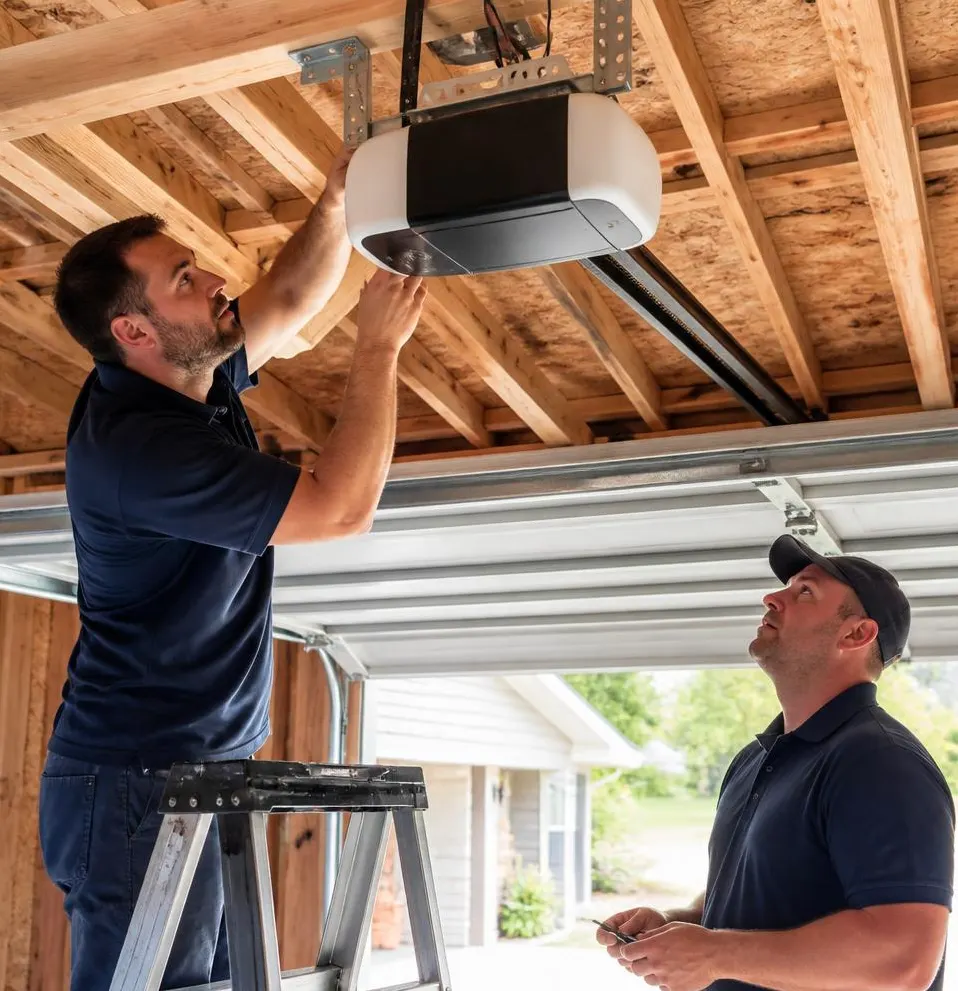
Winterizing Your Garage Door Before Washington County's First Deep Freeze
The short answer: test the door's balance, replace cracked weatherstripping, switch to a silicone-based lubricant, inspect springs and hardware for rust, and confirm your opener's safety sensors are clean and aligned — all before the first hard freeze locks everything in place. Here in Washington County, that window is narrow, so it's worth doing now while temperatures are still workable.
Why Winter Is Hard on Garage Doors
Deep cold makes steel contract, grease thicken, and rubber crack. Road salt sprays up into tracks and hardware every time a vehicle pulls in, accelerating rust on rollers, hinges, and springs. Then spring thaw brings meltwater and mud right back through the same seals that took a beating all winter. A door that's a little neglected in October often turns into a 6 a.m. no-start in January.
Start With a Balance Test
Disconnect the opener by pulling the release cord, then lift the door halfway by hand. A properly balanced door stays put; if it drifts up or crashes down, the springs are compensating poorly for the door's weight — and cold makes brittle springs more likely to snap under that extra strain. This is a quick check, but if the door doesn't hold, don't keep operating it manually. That's a sign spring tension needs adjustment before winter, not after a failure.
Replace Weatherstripping Before It Cracks Further
Rubber weatherstripping along the bottom and sides hardens and splits in freezing temperatures, especially if it's already a few years old. Run a hand along the bottom seal and side seals looking for flattening, gaps, or tears. Gaps here let in wind-driven snow, cold air, and the meltwater that shows up during spring thaw. Bottom seals are inexpensive and straightforward to swap; side and top seals (often a vinyl flap or rolled seal) are worth replacing at the same time if they're brittle, since you're already in there.
Switch to a Winter-Grade Lubricant
Standard grease thickens in deep cold and can make rollers and hinges bind, putting extra load on the opener motor. A silicone-based garage door lubricant stays fluid at low temperatures and won't attract the grit and salt residue that gums up tracks. Hit the rollers, hinges, springs, and the track itself — not the track's rolling surface with heavy grease, just a light coat on moving metal parts.
Check Hardware for Rust and Wear
- Rollers: look for flat spots, cracking (on nylon rollers), or visible rust pitting on steel ones.
- Hinges and brackets: check for loose bolts — vibration from constant opening and closing works fasteners loose over a season.
- Tracks: make sure they're still plumb and free of dents from errant snowblowers or shovels.
- Springs: look for gaps between coils or visible rust, both signs of fatigue that cold weather tends to expose at the worst moment.
Don't Skip the Opener
Clean the photo-eye sensors near the bottom of the track with a soft cloth — road salt film and dust can throw off alignment or block the beam entirely, which will stop the door from closing. If your opener has a battery backup, cold weather is hard on batteries generally, so test it now rather than discovering it's dead during a power outage mid-storm. Also confirm the auto-reverse safety feature still works by placing a 2x4 flat on the ground under the door and making sure it reverses on contact.
Think About Insulation if the Garage Is Attached
If the garage shares a wall with living space, an uninsulated door lets a lot of cold radiate into that wall — and in humid summers, the reverse happens with condensation. A door with foam-core insulation (or an add-on insulation kit for an existing door) helps even out temperatures and can cut down on the frost that sometimes forms on the inside of an uninsulated steel door during the coldest stretches.
When to Call Slinger Garage Door Service
If the balance test fails, if you spot rust or gapping on the springs, or if the door is slow, noisy, or unresponsive to the opener, it's time to call rather than keep adjusting it yourself — springs under tension are not a DIY repair. Our Spring Repair & Replacement and Garage Door Maintenance services cover exactly this kind of pre-winter tune-up: full hardware inspection, lubrication, weatherstripping replacement, and opener safety checks, done before the deep cold sets in. And if something fails on a sub-zero morning anyway, our Emergency Garage Door Service is there for exactly that.
If you're in Slinger, Hartford, West Bend, Jackson, Germantown, Richfield, Allenton, or Kewaskum and want your garage door squared away before winter hits, call Slinger Garage Door Service today to schedule a pre-winter check.